Let's be real: hiring is slow. You post a job, get flooded with resumes, spend hours screening candidates who aren't even close to qualified, and by the time you schedule interviews, your best people have already accepted offers elsewhere.
If you're hiring sales reps - especially high-volume roles like SDRs or commission-only closers - you don't have time for that. You need people in seats, hitting dials, and closing deals. Fast.
That's where AI applicant tracking systems come in. These platforms don't just organize resumes. They automate the grunt work, screen candidates instantly, and surface the best fits before your competitors even send their first email.
Here's how modern applicant tracking systems with AI are changing the game for hiring teams that need to move quickly.
What Is an AI Applicant Tracking System?
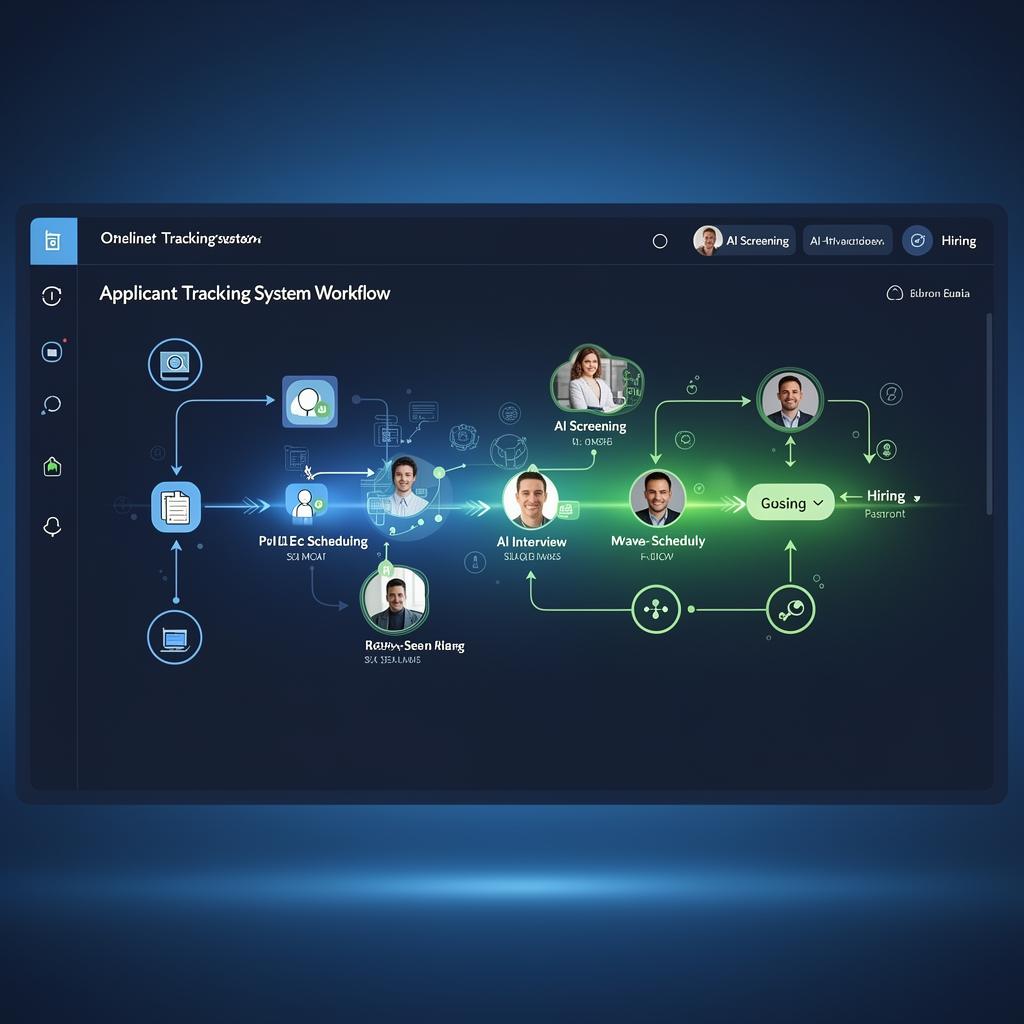
An AI-powered ATS is recruitment software that uses artificial intelligence to automate hiring tasks like resume screening, candidate ranking, interview scheduling, and communication.
Traditional applicant tracking software helps you organize applications. AI applicant tracking software actually does the work for you.
It scans resumes for relevant skills, experience, and keywords. It scores candidates based on fit. It sends follow-ups, schedules interviews, and keeps everyone in the loop - without you lifting a finger.
For sales hiring, this means you can process hundreds of candidates in minutes instead of days. No more manually reading resumes to figure out who's actually sold before and who just "has a passion for people."
Why Speed Matters in Sales Hiring
Here's the thing: top sales talent doesn't stay on the market long. If you're taking two weeks to screen resumes and another week to schedule first interviews, you've already lost.
According to industry benchmarks, the average time-to-hire is around 36 days. For sales roles, that's way too long. High performers are getting multiple offers within a week of starting their search.
AI recruiting software cuts that timeline in half - or more. Automated applicant tracking lets you screen, interview, and extend offers while your competitors are still sorting through their inbox.
Speed isn't just a nice-to-have. It's a competitive advantage in recruitment.
How AI Applicant Tracking Systems Speed Up the Hiring Process
1. Instant Candidate Screening
Manual resume review is a time suck. You're skimming for keywords, checking job titles, trying to figure out if someone's "sales experience" means they closed enterprise deals or worked retail.
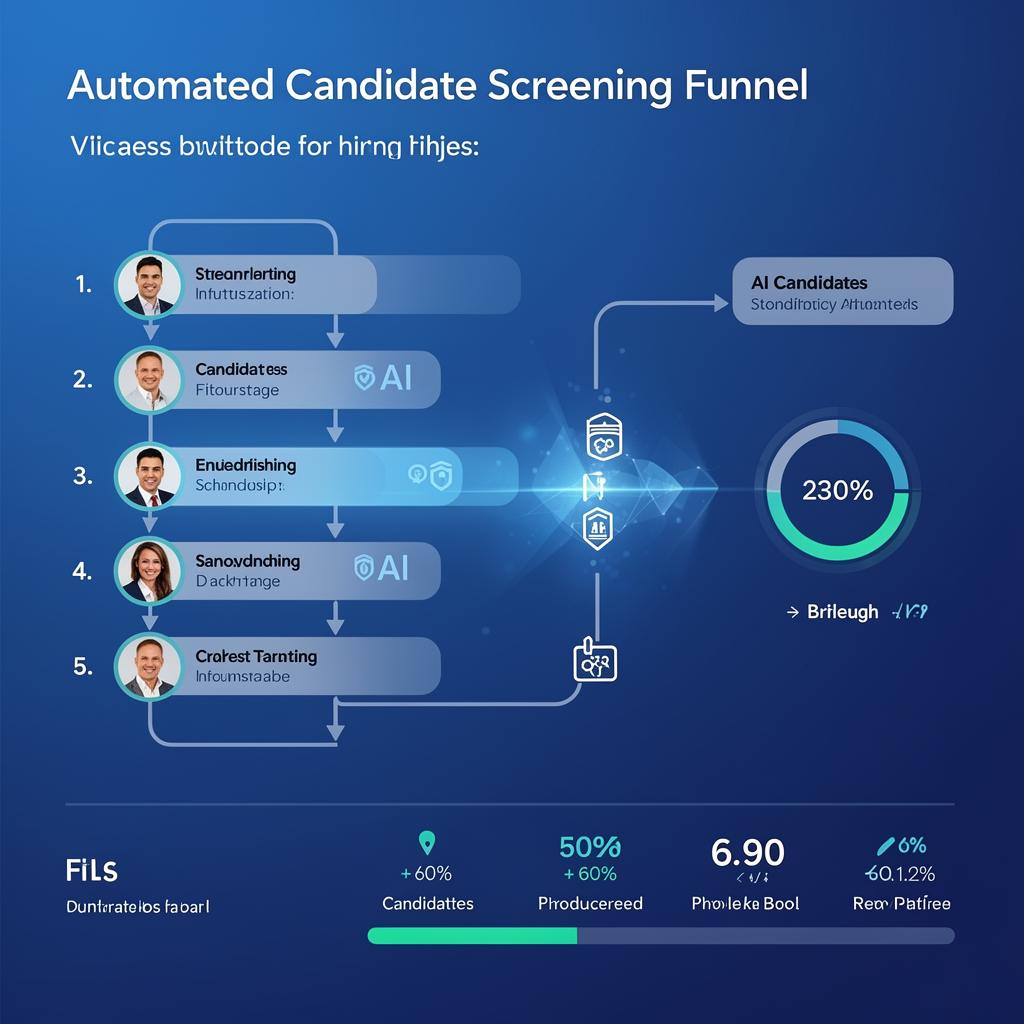
AI-powered candidate screening does this automatically. It parses resumes in seconds, extracts relevant candidate information, and scores people based on criteria you set - like quota attainment, industry experience, or specific sales methodologies.
For example, if you're hiring SDRs, an AI applicant tracking system can prioritize candidates who've worked in outbound sales, hit activity metrics, or have experience with your tech stack. No more wading through applications from people who've never made a cold call.
Result? You go from hundreds of resumes to a shortlist of qualified candidates in minutes.
2. Better Candidate Engagement Through Automation
One of the biggest bottlenecks in the hiring process is keeping candidates engaged. You screen someone, they look good, but by the time you email them three days later, they've moved on.
Applicant tracking platforms with AI automate follow-ups. They send confirmation emails when someone applies, update candidates on their status, and schedule interviews without back-and-forth email chains.
This keeps your pipeline moving and improves candidate experience. It also frees up your time to actually interview people instead of playing email tag.
Strong candidate engagement means fewer drop-offs and a better overall candidate experience - which matters when you're competing for top talent.
3. Smarter Candidate Sourcing and Matching
AI doesn't just look for keywords. It learns what "good" looks like based on your best performers.
Let's say your top SDRs all have high activity rates, short sales cycles, and experience in SaaS. An AI applicant tracking system can identify patterns in those candidate profiles and surface people with similar traits - even if their resumes don't match your job description word-for-word.
This is especially useful for commission-only or high-volume roles where you need to hire quickly and can't afford to miss hidden gems. Better candidate sourcing means you're not just working faster - you're working smarter.
4. Centralized Candidate Data and Tracking
One of the biggest challenges in recruitment is keeping track of where every candidate stands. Are they waiting for a response? Did they complete their interview? Did someone already follow up?
An applicant tracking system centralizes all your candidate data in one place. You can see exactly where each person is in your hiring process, what stage they're at, and what needs to happen next.
AI takes this further by automatically updating candidate information, tracking engagement, and flagging when someone needs attention. No more losing great candidates in your inbox or forgetting to follow up.
5. Reduced Bias, Better Decisions
Let's be honest: humans are biased. We skim resumes and make snap judgments based on school names, previous employers, or even how a resume is formatted.
Artificial intelligence removes a lot of that noise. It evaluates candidates based on objective criteria - skills, experience, performance indicators - not gut feel.
That doesn't mean AI is perfect. But it does mean you're making faster, more consistent decisions without unconscious bias slowing you down or hurting candidate experience.
6. Faster Interview Scheduling
Coordinating interviews is a nightmare. You're juggling calendars, sending availability requests, waiting for responses, and by the time everyone agrees on a time, the candidate has three other offers.
AI-powered applicant tracking platforms integrate with your calendar and automate scheduling. Candidates pick a time that works, interviews get booked instantly, and you move to the next stage without delay.
Faster scheduling = faster hiring = better talent acquisition.
AI ATS vs. Traditional Applicant Tracking Systems
Traditional ATS software is essentially a database. It stores resumes, tracks applications, and helps you stay organized. But it doesn't do anything for you.
AI applicant tracking systems are different. They actively work on your behalf - screening, scoring, communicating, and scheduling.
Here's the breakdown:
| Feature | Traditional ATS Platform | AI-Powered ATS |
|---|---|---|
| Application management | Organizes applications | Automates screening and scoring |
| Candidate tracking | Tracks candidate status manually | Surfaces best-fit candidates instantly |
| Communication | Requires manual review and outreach | Handles communication and scheduling |
| Scalability | Slows down as hiring volume increases | Scales effortlessly with high-volume recruitment |
If you're hiring one or two people a year, a basic applicant tracking system might be fine. But if you're scaling a sales team, you need automation and AI to keep up.
Why Sales Teams Need Specialized Applicant Tracking Software
Sales hiring is different from other roles. You're not just looking for "qualified" candidates - you're looking for people who can sell, hit quota, and ramp quickly.
Most generic ATS platforms miss this. They're built for HR teams hiring across departments, not sales leaders who need to fill the pipeline fast.
Some platforms like Zoho Recruit offer industry-specific customization, but most applicant tracking software still requires heavy manual work.
AI-powered ats software built specifically for sales focuses on what actually matters:
- Sales-specific screening: Quota attainment, activity metrics, deal size, sales methodologies
- Speed: Automated workflows that cut time-to-hire in half
- Volume handling: Process hundreds of candidates without adding headcount
- Better candidate sourcing: Find reps who actually know how to sell
If you're hiring SDRs, AEs, or commission-only reps, you need tools designed for your workflow - not generic HR software.

Real-World Impact: How Much Faster Is AI Hiring?
Let's talk numbers.
Manual hiring for a sales role typically looks like this:
- Resume screening and candidate tracking: 5–10 hours
- Initial outreach and candidate engagement: 3–5 hours
- Scheduling interviews: 2–4 hours
- Total time before first interview: 10–20 hours of work
With an AI-powered applicant tracking system, that same hiring process takes:
- Candidate screening: 10 minutes (automated)
- Initial outreach: Instant (automated)
- Scheduling interviews: Instant (automated)
- Total time before first interview: Less than 1 hour of actual work
You're not just saving time. You're compressing your hiring timeline from weeks to days.
That means you fill seats faster, ramp reps sooner, and start generating revenue while your competitors are still screening resumes and tracking candidates manually.
Does AI Replace Recruiters or Just Make Them Better?
Here's the deal: AI doesn't replace recruiters. It removes the grunt work so recruitment teams can focus on what actually matters - building relationships, improving candidate experience, and closing offers.
Think of it like this: AI handles the repetitive stuff (screening, tracking, scheduling, candidate engagement). Recruiters handle the human stuff (interviewing, negotiating, candidate experience).
The result? Faster hiring, better candidate quality, and recruiters who aren't burned out from manual admin work.
How to Choose the Right Applicant Tracking System
Not all ATS platforms are created equal. Here's what to look for:
1. Sales-specific features Generic applicant tracking systems don't understand sales metrics. Look for tools that screen for quota attainment, activity rates, and sales experience.
2. Automation depth Some platforms claim to be "AI-powered" but still require tons of manual work. Make sure your ats software actually automates screening, candidate sourcing, communication, and scheduling - not just keyword matching.
3. Speed and scalability If you're hiring high-volume roles, your applicant tracking platform needs to handle hundreds of candidates without slowing down. Test how quickly it surfaces qualified candidates.
4. Integration with your workflow Your ATS should integrate with your calendar, email, and CRM. If it doesn't, you're just adding another tool to manage.
5. Candidate experience matters The hiring process reflects your brand. Make sure your applicant tracking software creates a smooth candidate experience - not a frustrating one.
6. Transparent AI You should understand why the AI is ranking candidates the way it does. Black-box algorithms don't help you make better hiring decisions.
The Bottom Line: Faster Hiring = Competitive Advantage
If you're still manually screening resumes, coordinating interviews, and tracking candidate data in spreadsheets, you're losing talent to faster competitors.
AI applicant tracking systems don't just save time - they give you a recruiting advantage. You screen faster, engage candidates better, and close people before they explore other options.
For sales teams, that's the difference between hitting quota and scrambling to backfill roles.
---
Ready to Hire Faster?
SalesDraft uses AI-driven applicant tracking to help sales teams fill roles in days, not weeks. Automate candidate screening, rank people by sales fit, improve candidate engagement, and book interviews instantly.
Book a demo with SalesDraft and see how our AI-powered recruitment platform can cut your time-to-hire in half.